


FTA Is More Than Tariff Relief: Gujarat’s New Bid for a Larger Share of Global Markets
India has been aggressively signing Free Trade Agreements (FTAs) to push exports amid ongoing geopolitical uncertainties. In view of the importance being accorded to the FTAs by the Centre, The Secretariat organised a day-long FTA Conclave at Gandhinagar in Gujarat. In his keynote address, Gujarat’s Deputy Chief Minister Harsh Sanghavi said that the FTAs are a ‘trump card’ not only for his state but for the country as a whole and it is for the industry to take advantage of these trade pacts.
The FTAs are no longer mere instruments for reducing tariffs. They will prompt Indian industry to enhance global competitiveness, attract investment and facilitate technology transfer. In order to capitalise on new opportunities, businesses would need to move beyond traditional markets and meet global standards.
Held under the theme “Powering Exports, Unlocking Opportunities,” the FTA Conclave delivered a clear message: India has opened the doors to global markets; Gujarat’s industries must now get into action mode to increase their share in global markets.
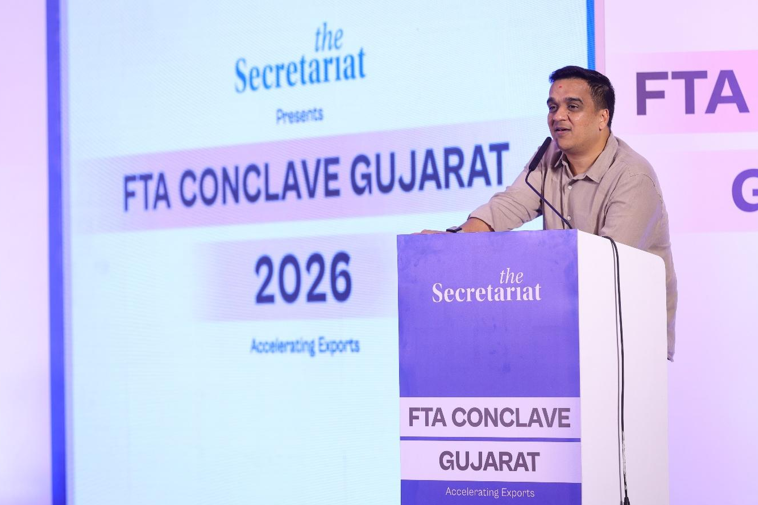
FTA Is a ‘Trump Card’ for Industry; Time to Move into Action Mode
Deputy Chief Minister Harsh Sanghavi urged industry representatives to view FTAs not merely as government agreements but as opportunities to expand business and enter new markets. He highlighted the potential of Gujarat in technology, electronics, international partnerships and the services sector.
Knowing How to Use FTAs Matters More
“Free Trade Agreements are a trump card for industries in Gujarat and India. What matters more, however, is how effectively these agreements are utilised. Industry representatives must now move into action mode and convert the opportunities available in global markets into tangible business.”
Electronics Can Become a Growth Engine for the Next Decade
“There is a significant gap between market demand and available supply in the technology and electronics sectors. This creates new opportunities for entrepreneurs in Gujarat. Entering the electronics sector does not simply mean manufacturing mobile phones; the broader electronics ecosystem offers numerous opportunities for investment and business.”
Dy CM Sanghavi also emphasised the importance of partnerships with international technology providers. He said discussions on technology and cooperation are underway with countries such as Israel, Russia and the United States. He also announced that initiatives have been undertaken to sign agreements with countries to promote tourism activities linked to the Buddhist Circuit.
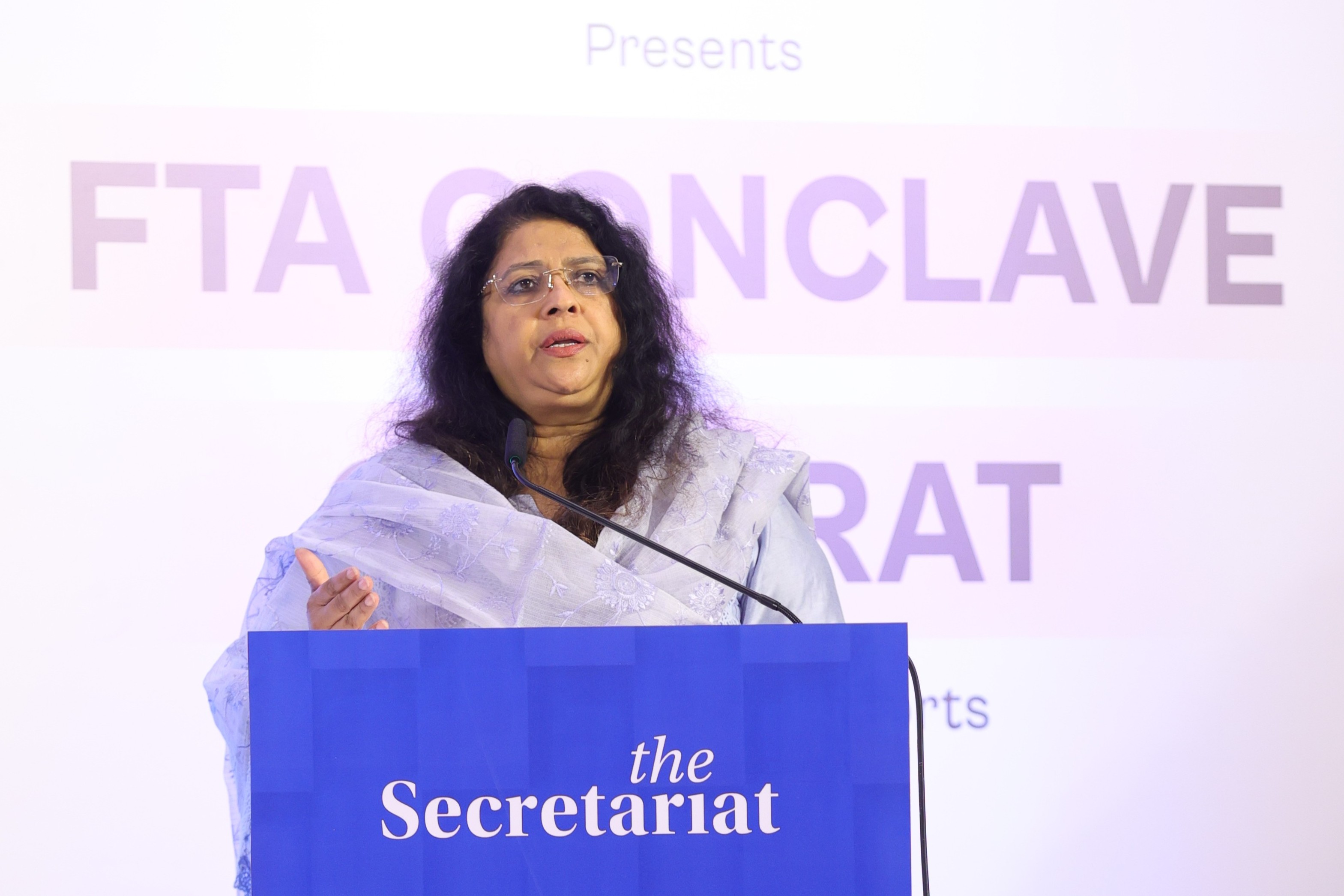
Industrial Policy Must Protect Investments Amid Global Uncertainty
Gujarat’s industrial policy is not merely a framework for increasing production; it is also intended to strengthen businesses to deal with problems emanating from global conflicts, supply-chain disruptions and market uncertainties, Additional Chief Secretary Mamta Verma said.
She spoke about the state government’s efforts to promote manufacturing aligned with global demand, strengthen export-oriented sectors, improve MSME capabilities and facilitate compliance with international quality standards.
Gujarat Must Manufacture for the World, Not Just for Itself
“Gujarat accounts for 40% of India’s manufacturing sector, and our vision is to maintain that edge.”
Verma’s message underlined that industrial incentives must go hand in hand with improvements in product quality, cost competitiveness and export readiness.
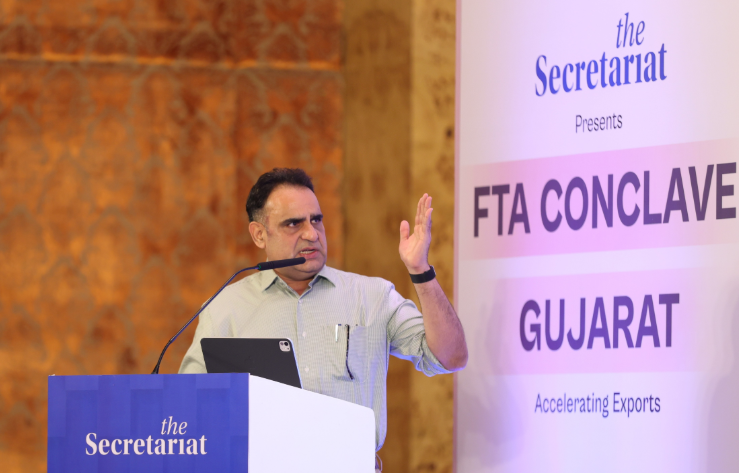
Market Access Is Only the Beginning; India Must Increase Its Market Share
Ajay Bhadoo described India’s changing FTA landscape as a significant shift in the country’s global trade strategy. Agreements involving partners such as the UK, EU, EFTA and Oman are creating opportunities for Indian exporters to access large international markets.
FTAs Alone Are Not Enough to Increase India’s Exports
“FTAs alone are not enough to expand India’s share in key global markets such as the UK and the EU. Adherence to international quality standards, competitiveness and the ability to scale up production are equally critical to strengthening India’s global trade presence.”
Quality, Cost, Delivery and Documentation Will Determine Export Success
“While FTAs ensure preferential market access, quality, certification, cost, timely delivery and proper documentation are critical for exporters. Neglecting documentation often prevents exporters from fully capitalising on available market opportunities.”
Bhadoo highlighted export opportunities in engineering goods, textiles and apparel, electronics, semiconductors and agricultural products.
Turning FTA Opportunities into Orders Is the Responsibility of Industry
Rajesh Panware said that trade agreements had opened up new opportunities, but businesses now needed to identify buyers and develop the capacity to deliver goods as required.
Market Intelligence and Government Feedback Are Equally Important
“Business associations and Export Promotion Councils can provide market intelligence, while Indian embassies can also offer assistance. Exporters should provide feedback to the government so that policy measures can be fine-tuned and made more effective.”
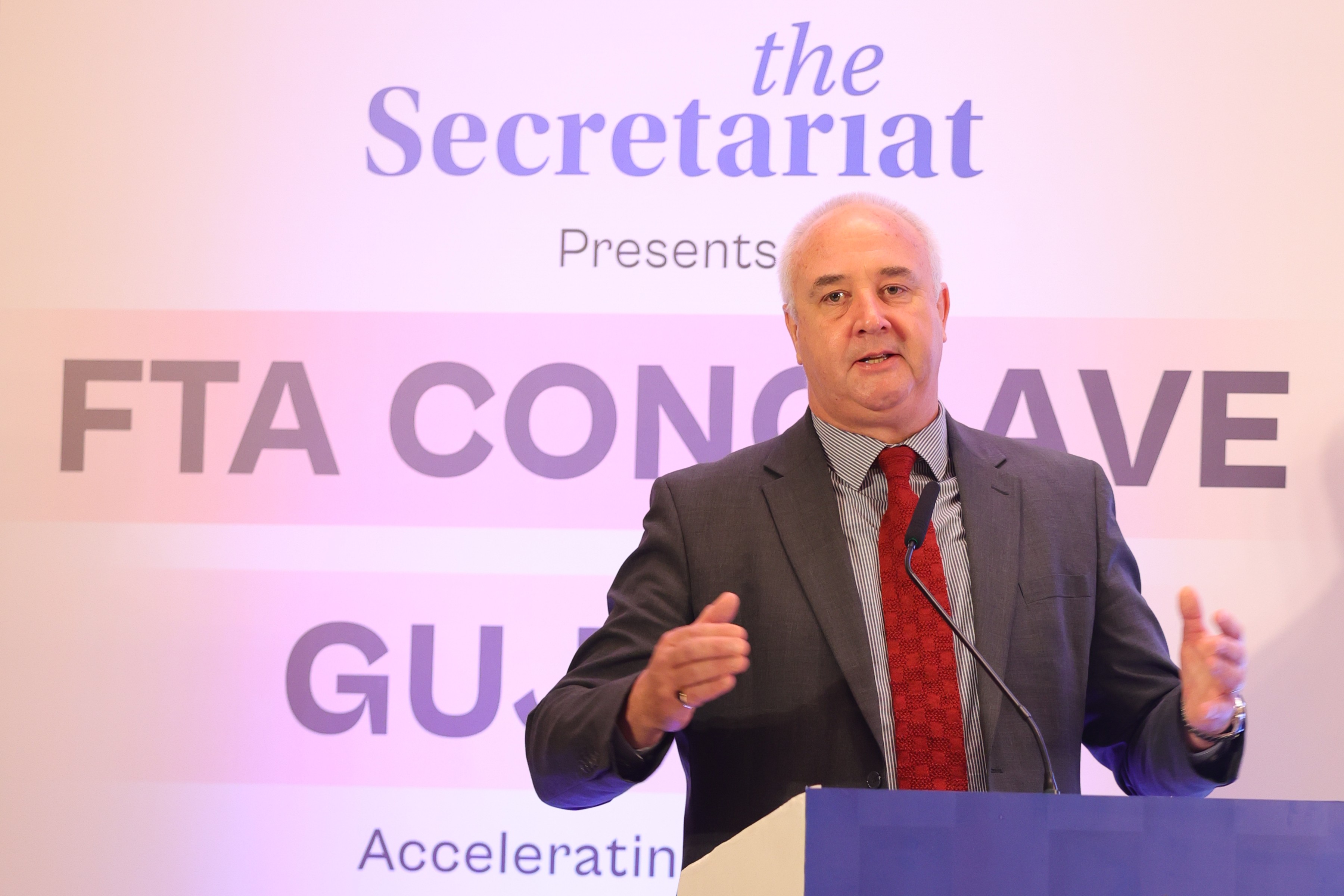
India-UK FTA Marks the Beginning of a New Economic Partnership
The India-UK FTA is more than a change in trading terms; it creates opportunities for new supply chains, technology collaboration and emerging sectors, Stephen Hickling said. He also highlighted the importance of MSMEs in the economies of both the UK and Gujarat.
The FTA Is Not an End in Itself, but a Beginning
“The India-UK FTA is not an end in itself; it is the beginning of a new phase of economic partnership. We are creating new supply chains and new opportunities in emerging sectors.”
New Opportunities in AI, Fintech and Cleantech
“The UK and Gujarat consider small and medium enterprises as the backbone of their economies. There are significant opportunities for cooperation in artificial intelligence, advanced manufacturing technology, fintech, cybersecurity, cleantech and environmental technology.”
Hickling also highlighted the role of the UK government’s office in Ahmedabad in building connections with Gujarat’s trade bodies. He emphasised that bilateral relationships must translate into practical business partnerships for industries to benefit from the FTA.

Simplify FTA Provisions and Prepare Businesses for Global Standards
As India’s FTA network expands, greater awareness among businesses and simplification of complex provisions are essential, Sangeeta Godbole said. She highlighted the growing importance of quality, environmental responsibility and carbon-footprint requirements, particularly in the context of India’s prospective trade agreement with the European Union.
Sustainability and Carbon Footprint Will Be Critical
“The provisions of FTAs, particularly complex issues such as the Carbon Border Adjustment Mechanism (CBAM), need to be simplified. Governments and Export Promotion Councils must work in this direction, while businesses must focus on complying with quality standards, sustainability requirements and carbon-footprint norms.”
Connectivity and Logistics Will Be Critical to India-Russia Trade
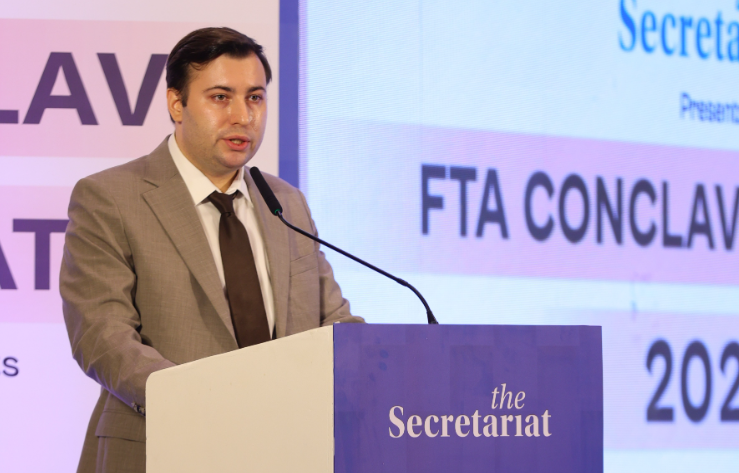
Discussing India-Russia trade relations, Vladislav Morozov highlighted ongoing free-trade negotiations, transport connectivity and alternative shipping routes. He identified the International North-South Transport Corridor (INSTC) and the North Sea Route (NSR) as potential future corridors for transporting goods.
Market Access and Transport Connectivity Are Key to India-Russia Trade
“Talks on free trade between the Indian and Russian governments have witnessed two rounds of negotiations, and the next round is scheduled for November. Both sides are working on mutually acceptable market access, transport connectivity and settlement in national currencies.”
INSTC and the North Sea Route Could Open New Trade Corridors
“The INSTC and the North Sea Route could become important future routes for the shipment of goods. Projects such as GIFT City and the Dholera cluster offer significant opportunities for cooperation, while ports such as Mundra and Kandla can play a critical role in connecting the two countries. However, connectivity remains a major challenge.”
Linking Trade Agreements with Export Strategy
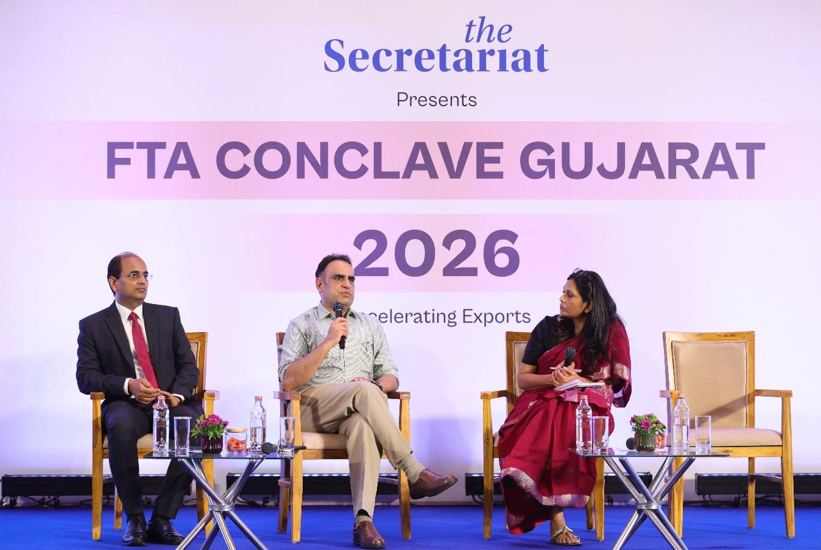
Anupam Kumar participated in the pre-lunch plenary session on “India’s Trade Pacts: FTA Engines and Connecting New Markets.”
The session focused on India’s trade agreements and their role in connecting exporters with new markets. Understanding the practical implications of trade agreements and the role of the DGFT is important for exporters seeking to benefit from preferential market access.
Understanding the Sectoral Impact of FTAs
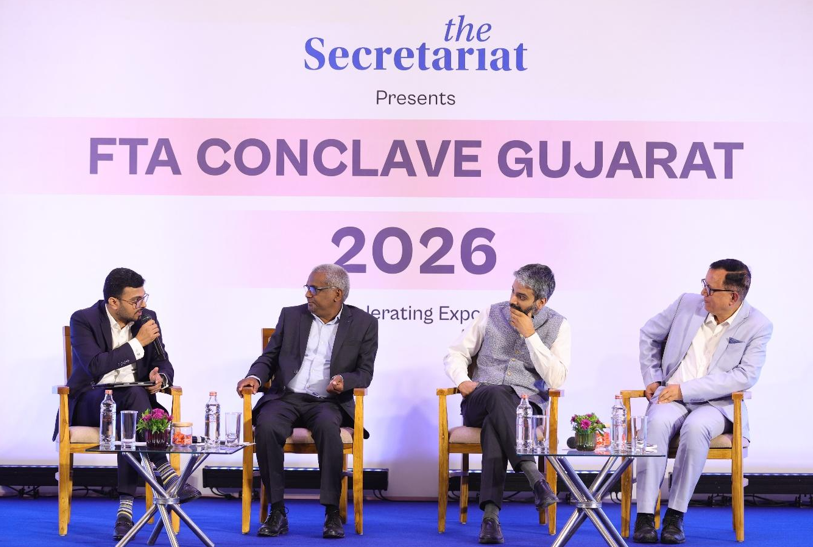
Dr. R. P. Sharma participated in the session on “India’s FTAs: Sectoral Implications and Emerging Opportunities.” The session examined the implications of trade agreements across industries and the emerging opportunities for exporters. Sector-specific analysis is particularly relevant for Gujarat because industries face different challenges in accessing tariff concessions, meeting certification requirements, complying with quality standards and responding to overseas demand.
Aligning Policy with Industrial Capabilities to Drive Export Growth
Rahul Ahluwalia participated in the conclave’s sectoral session on the economic implications of India’s FTAs and emerging opportunities for industry.
The session's focus was on understanding how trade agreements could influence different sectors and support export growth. A detailed transcript of Ahluwalia's remarks was not available in the programme material.
From Trade Agreements to Market Access: The Importance of Implementation
Tapan Mazumdar was a speaker in the sectoral session on “India’s FTAs: Sectoral Implications and Emerging Opportunities.” The session focused on the industry-specific implications of trade agreements and the practical opportunities available to exporters, bringing the perspective of a former DGFT official to the discussion.
Two Reports on India’s FTA and Trade Ecosystem Released
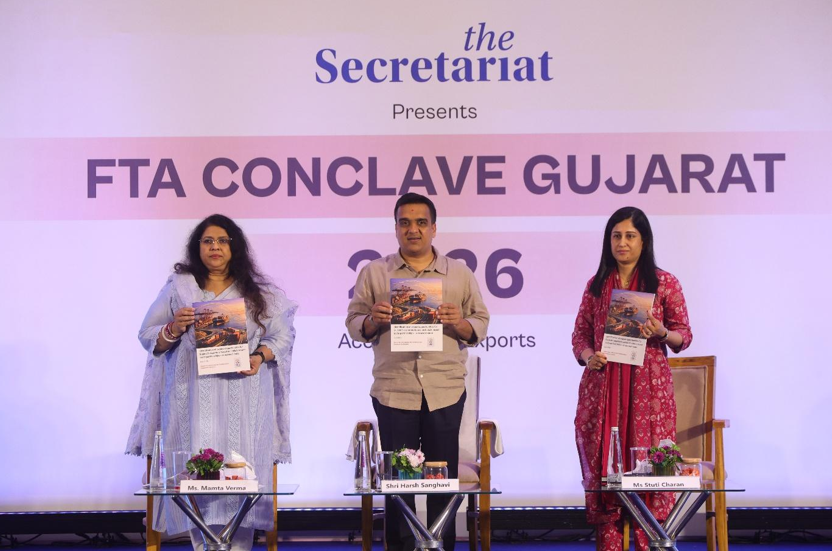
Deputy Chief Minister Harsh Sanghavi released two reports on India’s FTA and trade ecosystem at the conclave. Mamta Verma, Additional Chief Secretary, Industries and Mines Department, and Stuti Charan, Joint CEO of GRIT, were present on the occasion.
The reports released were:
- India’s FTA and Trade Ecosystem — National Economic Forum
- India’s FTA and Trade Ecosystem — Gujarat Rajya Institution for Transformation (GRIT)
The reports aim to provide policy insights into India’s evolving trade ecosystem and the opportunities emerging from its expanding network of FTAs. Such studies can help Gujarat’s industries and exporters better understand global competitiveness, trade expansion and potential pathways for export growth.
Key Interaction with Industry Representatives
Deputy Chief Minister Harsh Sanghavi and Additional Chief Secretary Mamta Verma also interacted with industry representatives and responded to their queries during the conclave.
Both emphasised the importance of understanding Gujarat’s industrial policy and the provisions associated with it, encouraging industry representatives to study the policy and approach the government directly if they encountered difficulties in accessing or understanding its provisions.
The interaction highlighted the importance of connecting policy intent with implementation and ensuring that businesses can effectively utilise available government support.
Policy Takeaways: What Gujarat Must Do to Capitalise on FTAs
The discussions at the conclave point towards five key priorities for Gujarat’s industrial and export policy.
- Move beyond tariff concessions and focus on quality. Trade agreements facilitate access to overseas markets, but compliance with international quality standards, certifications and product requirements will determine actual export success.
- Improve practical FTA awareness among MSMEs. Small and medium enterprises need better access to market intelligence, export documentation support, certification guidance and connections with overseas buyers.
- Expand production capacity and strengthen supply chains. Businesses must develop the capacity to fulfil international orders on time and at competitive costs. Market access must be supported by scalable production and reliable delivery.
- Prepare for sustainability and carbon-compliance requirements. Environmental standards, carbon-footprint requirements and mechanisms such as CBAM must become part of export planning, particularly for businesses targeting European markets.
- Strengthen technology partnerships and international collaboration. Technology cooperation in electronics, advanced manufacturing, fintech, cleantech and other emerging sectors could open new avenues for Gujarat’s industrial and export growth.
The Bottom Line
The expansion of India’s FTA network is creating new opportunities for Gujarat’s industries. However, there is a significant gap between signing trade agreements and achieving success in global markets. Bridging this gap will require effective policy implementation, industry preparedness, quality compliance, sound documentation and stronger supply-chain capabilities.
The real test of India’s FTAs will not be the number of agreements signed, but how many Gujarat-based businesses enter new markets, increase exports, attract investment and generate employment.
The Secretariat’s Policy Perspective
Gujarat has moved beyond the stage of merely increasing awareness about FTAs. The next phase must focus on connecting policy with markets and markets with the production capabilities of industry.
Coverage adapted from For The Record, The Secretariat’s weekly policy newsletter — Issue #47, 23 October 2026.